
Ready to read the Quran in its original language? This deep dive into an Arabic Alphabet Course online is your first step. Learn letters, Tajweed, and find the best online Quran class for you.
Table of Contents
Beyond Alif, Baa, Taa: How the Right Arabic Alphabet Course Online Can Unlock a Divine Connection
Have you ever stood before a locked door, holding a key that doesn’t quite fit? You can see the splendor inside, you can almost feel the warmth and hear the whispers of what lies beyond, but you remain on the outside. For millions of aspiring Muslims and language lovers, the Quran is that magnificent room, and the Arabic alphabet is the master key.
Many of us have tried that key. We’ve stumbled through Alif, Baa, Taa, perhaps in a weekend school or with a well-meaning relative. But without a structured, compassionate, and deeply insightful guide, the script can feel like a tangled web of dots and lines. The key turns, but the lock doesn’t budge. The door remains closed.
What if I told you that the problem was never the lock, nor your ability to turn the key? The problem was the keyhole itself. A proper Arabic alphabet course online isn’t just about memorizing 28 letters; it’s about learning the precise shape, sound, and soul of each character. It’s the foundational act of sharpening that key until it slides in smoothly, unlocking not just words, but meaning, melody, and a direct, intimate connection with the words of Allah.
This isn’t just another “learn your letters” article. This is a deep dive into why the journey of Arabic for beginners must begin with reverence and precision. We’ll explore how a single dot changes meaning, how the breath creates divinity in sound, and how the right online Arabic tutor can guide you from confusion to clarity. If you’ve ever dreamed of being able to read the Quran easily, your journey starts here, with the very first letter.
Why the Alphabet is Your Unshakable Foundation (And Why Rushing Fails)
In the age of instant gratification, the idea of spending weeks on the alphabet can feel tedious. We want to jump into verses, to recite Surah Al-Fatihah with confidence. But building a skyscraper on sand is a recipe for collapse. The Arabic script is a precise and logical system, and understanding its mechanics is non-negotiable.
More Than Just Symbols: A System of Meaning
Consider this: the Arabic letters ح (Haa), ج (Jeem), and خ (Khaa) all share the same basic shape. The only difference? The number and placement of dots.
- ج has a single dot inside the curve.
- ح has no dot.
- خ has a single dot above the curve.
A misplaced or misrecognized dot doesn’t just create a spelling error; it can change the entire meaning of a word. In the context of the Quran, such a minor mistake could alter the meaning of a divine verse. A high-quality Arabic alphabet course online ingrains this visual precision from day one, training your eye to see not just shapes, but critical distinctions.
The Bridge to Tajweed: Phonetics as Worship
This is where most generic courses fail. They teach you the name of the letter (e.g., “Qaaf”) but not its true sound or origin. For the Quran, the Sifat (characteristics) and Makharij (points of articulation) of each letter are the very essence of correct recitation practice.
Think of the letter “Ayn” (ع). It’s not a grunt or a strained sound. It’s a deep, throaty consonant that originates from the middle of the throat. Getting it wrong doesn’t just make your Arabic sound accented; it can change the word. ‘Ilm (علم) with a light Alif means “knowledge,” while ‘Alam (عالم) with a correct ‘Ayn means “world.” A foundational Quranic foundation course understands this and introduces the concepts of Tarteel / Tajweed rules at the alphabet level, setting you up for a lifetime of beautiful, correct recitation.
Deconstructing the Arabic Script: A Beginner’s Map
Let’s demystify the script itself. For a complete novice, it can seem daunting, but it’s built on elegant, repeating patterns.
The 28 Building Blocks: An Overview
The Arabic alphabet consists of 28 primary letters, all consonants. Vowels are indicated by marks (harakat) above or below the letters. The first step in any learn Arabic alphabet journey is to become familiar with these characters in their isolated form.
| Letter Name | Isolated Form | Sound Description (Approximation) |
| Alif | ا | Long ‘a’ as in “father” |
| Baa | ب | ‘b’ as in “bed” |
| Taa | ت | ‘t’ as in “tea” |
| Thaa | ث | soft ‘th’ as in “think” |
| Jeem | ج | ‘j’ as in “jam” (can vary by dialect) |
| Haa | ح | Heavy ‘h’, constricted from the throat |
| Khaa | خ | ‘ch’ as in Scottish “loch” or German “Bach” |
| Dal | د | ‘d’ as in “dog” |
| Thal | ذ | soft ‘th’ as in “this” |
| Raa | ر | rolled ‘r’ |
| Zay | ز | ‘z’ as in “zoo” |
| Seen | س | ‘s’ as in “see” |
| Sheen | ش | ‘sh’ as in “she” |
| Saad | ص | heavy, deep ‘s’ |
| Daad | ض | heavy, deep ‘d’ (unique to Arabic) |
| Taa | ط | heavy, deep ‘t’ |
| Dhaa | ظ | heavy, emphatic ‘th’ |
| ‘Ayn | ع | deep guttural sound, no English equivalent |
| Ghayn | غ | guttural ‘gh’, like a soft gargle |
| Faa | ف | ‘f’ as in “far” |
| Qaaf | ق | deep ‘q’, from the uvula |
| Kaaf | ك | ‘k’ as in “kite” |
| Laam | ل | ‘l’ as in “lamp” |
| Meem | م | ‘m’ as in “mom” |
| Noon | ن | ‘n’ as in “noon” |
| Haa | ه | ‘h’ as in “hat” (lighter than ح) |
| Waw | و | ‘w’ as in “wow”, or long ‘oo’ |
| Yaa | ي | ‘y’ as in “yes”, or long ‘ee’ |
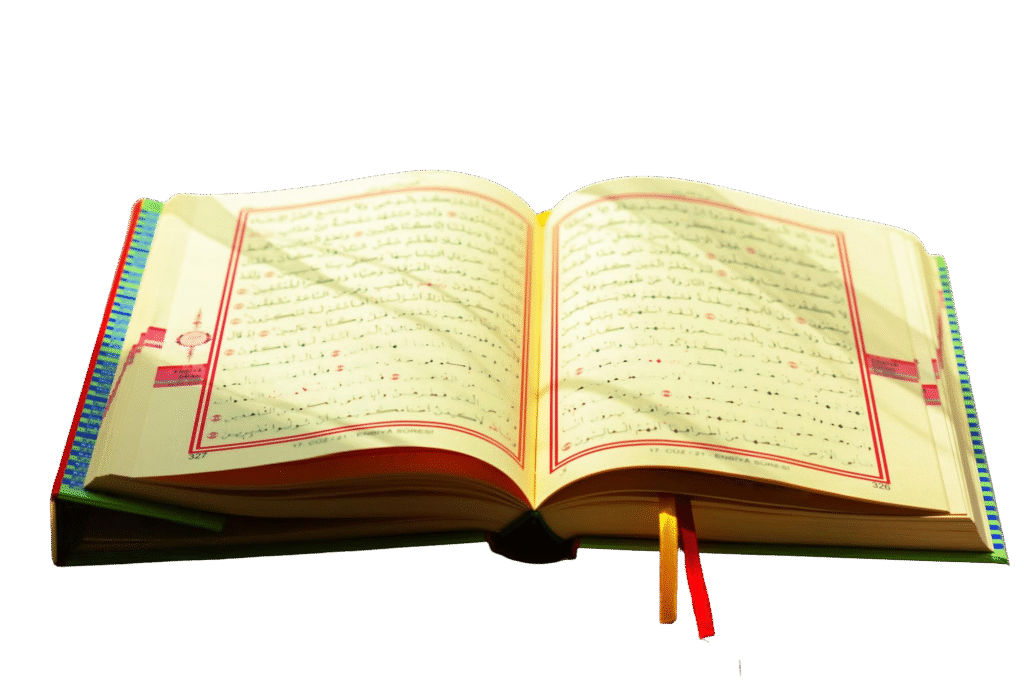
The Shape-Shifting Nature of Arabic Letters
This is a crucial concept that a good online Arabic alphabet course online will masterfully teach. Unlike English, where letters have mostly one form, Arabic letters change shape depending on whether they appear at the beginning, middle, or end of a word.
- Isolated: The form when the letter stands alone (as in the table above).
- Initial: The form when it is the first letter in a word.
- Medial: The form when it is in the middle of a word.
- Final: The form when it is the last letter in a word.
For example, the letter Baa (ب):
- Isolated: ب
- Initial: بـ (as in بَيت – bayt – house)
- Medial: ـبـ (as in جَبل – jabal – mountain)
- Final: ـب (as in باب – baab – door)
Understanding this fluidity is what transforms the script from a collection of disjointed symbols into a flowing, cursive art form. Arabic writing practice focused on these connections is essential.
The Heart of Quranic Recitation: Introducing Tajweed at the Alphabet Level
You cannot separate the Arabic alphabet from the Quran. To do so is to learn the notes of a piano but never the music. This is where Tajweed comes in.
What is Tajweed? Beyond “Proper Pronunciation”
Tajweed linguistically means “to make better” or “to improve.” Technically, it is the set of rules governing how the letters of the Quran should be articulated during recitation. It’s the science of giving each letter its right (Haqq) and its due (Mustahaqq).
A common mistake is to treat Tajweed as an advanced topic. In reality, the seeds of Tajweed are sown with the very first letter you learn. A dedicated Arabic alphabet course online with Tajweed integrates these principles from the start.
Makharij al-Huruf: Where the Sound Originates
Makharij al-Huruf (The Points of Articulation) is the cornerstone of mastering Arabic pronunciation. It is the precise anatomical location from which the sound of a letter emanates. Scholars have identified 17 main points of articulation, spanning from the deepest part of the throat to the lips.
A simplified classification includes five major areas:
- The Empty Space (Al-Jawf): For the long vowels (Alif, Waw, Yaa as Madd letters).
- The Throat (Al-Halq): For letters like ع, ح, غ, خ, هـ, ء.
- The Tongue (Al-Lisan): The origin of most letters (e.g., ق, ك, س, ر).
- The Lips (Al-Shafatayn): For letters like ب, م, و, ف.
- The Nasal Passage (Al-Khayshum): For the ghunnah (nasalization) in Noon and Meem.
An online Arabic tutor specializing in Tajweed will use diagrams, mirrors, and tactile feedback to help you locate these points. For instance, to pronounce Qaaf (ق) correctly, you must feel the back of your tongue touching the soft palate (uvula), a sensation completely foreign to English speakers. Getting this right from the beginning prevents the formation of bad habits that are incredibly difficult to break later.
Your Learning Pathway: From Zero to Reading Words
So, what does a practical, effective learning journey look like? Here is a roadmap that a well-structured course will follow.
Phase 1: Recognition and Isolation (The “What”)
- Learn the 28 letters in their isolated forms.
- Associate each letter with its name and basic sound.
- Use flashcards, apps, and repetition for memorization.
Phase 2: Connection and Form (The “How”)
- Learn the initial, medial, and final forms of each letter.
- Practice connecting letters to form simple words.
Begin basic Arabic reading skills with two-letter and three-letter words without vowels.
Phase 3: Phonetic Deep Dive (The “Why”)
- Introduce the concept of Makharij for critical letters (like the throat letters, Qaaf, etc.).
- Practice distinguishing between similar sounds (e.g., ت vs. ط, س vs. ص, ح vs. هـ).
- This is where you move from “reading” to “reciting.”
Phase 4: Vowels and Rhythm (The “Music”)
- Learn the short vowels (Fatha, Kasra, Damma) and the Sukoon (resting sign).
- Practice reading words with vowel marks, creating a rhythm.
- Introduce the Shaddah (stress) and Madd (elongation).
Phase 5: Applied Practice (The “Application”)
- Start reading short, familiar verses from the Quran (e.g., Surah Al-Ikhlas, Al-Falaq, An-Nas).
- Practice with a Noorani Qaida or similar foundational text, which is designed specifically for this progression.
Choosing Your Guide: What to Look for in an Online Arabic Alphabet Course Online
The digital world is flooded with options. How do you choose the right one? Here are the critical factors to consider.
The Non-Negotiables of a Quality Course
- Tajweed-Integrated Curriculum: The course should mention Tarteel / Tajweed rules explicitly, even at the beginner level.
- Qualified, Native-Speaking Instructors: Look for teachers who are not just native speakers but also have formal certification (Ijazah) in Tajweed and experience teaching Arabic for beginners.
- Structured Progression: It should follow a clear, logical path, like the one outlined above, ideally based on a recognized system like the Noorani Qaida.
- Interactive and Feedback-Driven: Pre-recorded videos are not enough. You need live sessions or a mechanism for personalized feedback on your pronunciation.
The Power of a Live Tutor vs. Self-Paced Learning
| Feature | Self-Paced (Pre-recorded) Course | Live Online Arabic Tutor |
| Flexibility | High – Learn anytime | Scheduled, but structured |
| Cost | Often lower | Typically higher |
| Personalized Feedback | Minimal to none | Essential and immediate |
| Pronunciation Correction | You correct yourself | The tutor hears and corrects you |
| Pace | You set the pace | The tutor sets a guided, consistent pace |
| Motivation | Self-motivation required | Accountability and encouragement |
For a subject as nuanced as pronunciation, a live online Arabic tutor is almost always the superior choice, especially in the foundational stages. The immediate correction of your Makharij is invaluable.
Inspiring Success: A Student’s Journey
*Aisha, a 42-year-old mother from London, shared her story: “I had tried for years to read the Quran. I knew the letters individually, but they swam together on the page. I enrolled in a course that focused heavily on Makharij al Huruf. My teacher would have me hold my hand to my throat to feel the vibration for the ‘Haa’, or practice in front of a mirror to see my tongue position for the ‘Qaaf’. It was a revelation. It wasn’t just learning; it was a physical and spiritual awakening. The day I read the first page of Surah Al-Baqarah without stumbling, I wept. The door had finally opened.”*
Your Call to Action: Take the First Step with Confidence
The path to reading the Quran in its original, majestic language begins with a single, deliberate step. It begins with a commitment to not just learn the alphabet, but to understand it, to feel it, and to respect it.
Don’t let the fear of a complex script hold you back any longer. The key is in your hands. You just need the right keyhole.
Ready to transform your relationship with the Quran?
- Explore our comprehensive Online Quran Class, which begins with a deep and immersive Arabic alphabet course online taught by certified, compassionate tutors.
- Book a free trial session today to experience our Tajweed-focused teaching methodology and see the difference for yourself.
- Download our free guide: “5 Common Mistakes Beginners Make with Arabic Letters and How to Avoid Them.”
The divine words of the Quran have been waiting for you. It’s time to meet them, one beautiful letter at a time.
Discover More Fascinating Facts — Visit The Fact Journal Now!
1. I’m a complete beginner with no background in Arabic. Is this course suitable for me?
Absolutely. A well-designed Arabic alphabet course online is specifically created for absolute beginners. It assumes no prior knowledge and starts from the very first letter, Alif. The journey is structured to build your confidence step-by-step, ensuring you have a solid foundation before moving on to more complex concepts like connecting letters or reading words.
2. How long does it typically take to learn the entire Arabic alphabet?
The time it takes can vary depending on your pace, dedication, and practice schedule. However, with consistent study (e.g., 3-5 hours per week), most students can confidently recognize, pronounce, and write all 28 letters in their different forms within 4 to 8 weeks. Remember, the goal is not just memorization, but proper pronunciation and application
3. What is the main difference between a general Arabic course and a Quran-focused alphabet course?
A general Arabic language basics course might focus on modern standard Arabic used in media and conversation, often prioritizing vocabulary and grammar. A Quran-focused course, however, prioritizes precise pronunciation (Tajweed), the rules of elongation, and the unique phonetics required to recite the Quran correctly. It uses Quranic vocabulary from the very beginning to build relevance.
4. Can I really learn correct pronunciation through an online class?
Yes, definitively. A skilled online Arabic tutor uses high-quality audio/video, screen-sharing for visual aids, and, most importantly, provides live, immediate feedback. They can hear your pronunciation and correct your Makharij (point of articulation) in real-time, which is crucial for mastering sounds that don’t exist in English.
5. What is Noorani Qaida, and why is it so important?
The Noorani Qaida (or Nurani Qaidah) is a classic, time-tested foundational textbook used across the world to teach the Arabic alphabet and the basic rules of Tajweed. It provides a structured, incremental approach, starting with individual letters and progressing to complex words and Quranic verses. Many online courses are built around its proven methodology.
6. How much should I practice each day to see good progress?
Consistency is more important than duration. Even 20-30 minutes of focused, daily practice is far more effective than a long session once a week. Daily practice helps muscle memory (for pronunciation and writing) and reinforces what you’ve learned, leading to steady and retainable progress.
7. I struggle with letters from the throat, like ‘Ayn and Ghayn. Any tips?
You are not alone! These are among the most challenging letters for non-natives. A good tip for ‘Ayn (ع) is to pretend you’re at the doctor and saying “aaah” to show your throat. Constrict your throat muscles in the middle of that sound. For Ghayn (غ), it’s a guttural sound similar to gargling water but without water. A live tutor is especially helpful for demonstrating and correcting these specific letters.
8. Is learning the alphabet enough to start reading the Quran?
Learning the alphabet is the essential first step, but it’s not the only one. After the alphabet, you will learn how letters connect, the vowel system (harakat), and basic reading rules. A Quranic foundation course that covers all these elements will enable you to start reading simple verses of the Quran with practice and guidance.
9. What is the ultimate goal after completing an Arabic alphabet course online?
The ultimate goal is to seamlessly transition into reading the Quran. After mastering the alphabet, you will move on to a Quranic foundation course online where you’ll apply your skills to read short Surahs (chapters), understand basic Tajweed rules in context, and build the fluency and confidence to start reading the Quran independently and beautifully.